
School of Nursing & Health Sciences · Graduate program
Master of Science in Nursing: Family Nurse Practitioner
Take the next step from RN to primary care provider.
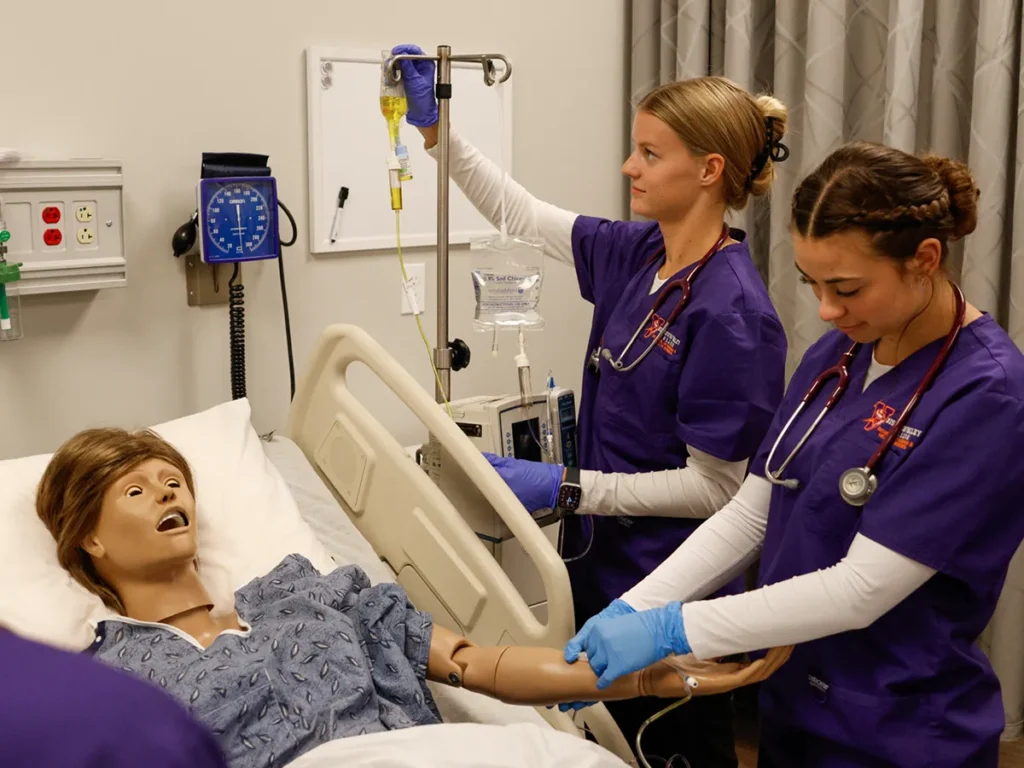
You already care for patients. MVU’s online MSN–Family Nurse Practitioner (FNP) track helps you build the advanced knowledge and clinical skills to assess, diagnose, and manage care for patients of every age.
45
credit hours
Online
coursework in Canvas
2 years
of courses and clinicals
4
primary care practicums
Near you
approved clinical sites
CCNE
accredited MSN program
Why MVU for your MSN
Advance your nursing career without stepping away from it
Online coursework, clinical experiences close to home, and a program built on national nurse practitioner standards.
Study online
Coursework is delivered online through Canvas, so you can study around your nursing schedule.
Clinicals close to home
Complete your clinical hours in approved clinical facilities near where you live and work.
Built on national standards
The program uses the American Association of Colleges of Nursing framework and follows National Organization of Nurse Practitioner Faculties guidelines.
An accredited program
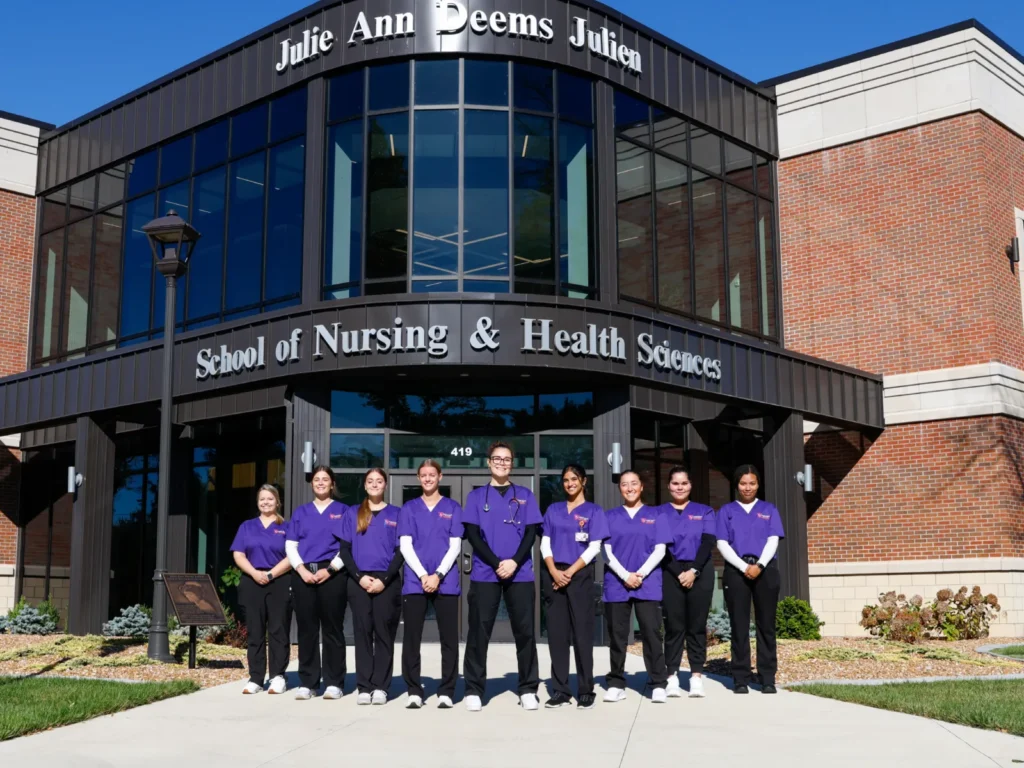
MVU’s master’s program in nursing is accredited by the Commission on Collegiate Nursing Education (CCNE). See accreditation.
Ready for certification
Graduates are eligible to sit for the ANCC or AANPCB family nurse practitioner certification exam.
Is this program for me?
The FNP track may be a great fit if you want to…
- Grow from RN practice into an advanced practice nursing role.
- Provide primary care to patients across the lifespan, from newborns to older adults.
- Earn your MSN online while you stay in your community.
- Build on your BSN with advanced coursework and supervised clinical practice.
What will I learn to do?
Skills you’ll practice and grow
- Assess patients, interpret diagnostic work-ups, and make a diagnosis.
- Develop, carry out, and evaluate plans of care for patients across the lifespan.
- Promote wellness and disease prevention with patients, families, and other disciplines.
- Use research and best evidence to improve quality, safety, and outcomes.
- Lead and collaborate with interprofessional teams in complex health systems.
Program learning outcomes
The MSN is built on the 10 domains of professional nursing practice defined by the American Association of Colleges of Nursing (AACN). By graduation, you’ll meet the expected competencies in each domain:
- Knowledge for Nursing Practice
- Person-Centered Care
- Population Health
- Scholarship for the Nursing Discipline
- Quality and Safety
- Interprofessional Partnerships
- Systems-Based Practice
- Informatics and Healthcare Technologies
- Professionalism
- Personal, Professional, and Leadership Development
MSN program goals
The goals of the Master of Science in Nursing program are to:
- Advance the education for the baccalaureate prepared nurse to serve in leadership roles in practice setting, advanced nursing practice, nursing education, and/or administrative roles.
- Prepare graduates for advanced practice nursing to meet the healthcare needs of diverse populations (individuals, families, groups and communities) in multiple health care settings such as primary care, hospital inpatient/outpatient, managed care organizations, and governmental organizations.
- Prepare nurse practitioners qualified and dedicated to provide culturally sensitive and competent primary health care to diverse populations across the lifespan, locally, nationally, and around the globe.
- Use research-based/ best practices from nursing and other disciplines to advocate for policy changes that will improve the health outcomes of individuals, families, communities, and aggregate populations.
- Promote a systems perspective to deliver high quality, cost effective, and safe care by working collaboratively with organizational leadership.
- Prepare nurse educators to transition into academic or clinical teaching roles thus helping students and nursing staff to think critically and use best-practices while maintaining competence in delivering patient centered care in diverse settings.
Your path
From RN to family nurse practitioner
Each stage builds on the last: advanced science first, then primary care theory paired with supervised clinical practice.
01
Advanced foundations
An MSN orientation, then advanced pathophysiology, pharmacology, and health assessment.
02
Skills and role
Hands-on advanced practice skills and lab work, plus your transition to the advanced practice nurse role.
03
Primary care theory
Two primary care theory courses prepare you to care for patients with acute and chronic needs.
04
Clinical practicums
Four primary care practicums put your knowledge to work with patients in approved clinical settings.
05
Capstone
Apply research and best evidence to clinical practice in a final capstone project.
What clinical training looks like
- Complete four primary care practicums in approved clinical facilities.
- Gain clinical experience close to where you live and work.
- Practice the full scope of primary care: assessment, diagnosis, treatment, and patient education.
- Connect primary care theory to the patients you see each week.
Clinical requirements, site approval, and program policies are explained in the MSN Student Handbook and MSN Clinical Handbook.
4
primary care practicums
14
credit hours of clinical practicum
Practicums run alongside and after your primary care theory courses, so what you learn in class shows up in clinic.
Where can this degree take me?
Primary care for patients of every age
Family nurse practitioners care for patients from newborns to seniors in settings like these.
Primary care
Hospital inpatient and outpatient care
Managed care organizations
Government health organizations
About certification and licensure. Graduates are eligible to sit for the American Nurses Credentialing Center (ANCC) or American Academy of Nurse Practitioners Certification Board (AANPCB) exam. Certification and advanced practice licensure come from those organizations and the state, not the university. If you plan to practice outside Missouri, check that state’s requirements and MVU’s professional licensure disclosures.
Affording your degree
Plan your investment
MSN tuition is charged per credit hour, and MVU BSN graduates save 20%. Plan for course fees and clinical costs, too.
Tuition
$750 per credit hour for 2026–27, plus a $200 enrollment fee each academic year. See tuition and fees.
MVU BSN graduates save 20%. Earned your BSN at Missouri Valley? You get 20% off MSN–FNP tuition.
Program costs
Some courses carry lab or material fees, and you’ll provide your own liability insurance. See the 2026–27 MSN–FNP approximate costs, including lab (Google Doc).
Financial aid
Graduate students may qualify for federal loans and other aid, plus outside awards such as the National Health Service Corps Scholarship. Start with Tuition & Financial Aid.
Explore the curriculum
45 credit hours, step by step
Most courses are 3 credit hours; others are noted. You begin with advanced foundations and finish with four clinical practicums and a capstone.
Course descriptions and requirements in the catalog →
Program handbooks
Your handbooks explain program policies, clinical requirements, and what’s expected of you as an MSN student. Not sure which year applies to you? Ask the MSN Director.
- 2026–27 MSN Student Handbook (Google Doc)
- 2026–27 MSN FNP–NE Clinical Handbook (Google Doc)
- 2025–26 MSN Student Handbook (Google Doc)
- 2025–26 MSN Clinical Handbook (Google Doc)
Advanced foundations (10 credit hours)
- NURS 500 Orientation to MSN (1 credit)
- NURS 510 Pathophysiology for Advanced Nursing Practice
- NURS 520 Pharmacology for Advanced Nursing Practice
- NURS 530 Advanced Health Assessment
Advanced practice skills and role (7 credit hours)
- NURS 543 Advanced Practice Skills in Primary Care & Lab (4 credits)
- NURS 550 Transitioning to the Advanced Practice Nurse Role
Primary care theory (8 credit hours)
- NURS 560 Primary Care Theory I (4 credits)
- NURS 570 Primary Care Theory II (4 credits)
Clinical practicums (14 credit hours)
- NURS 561 Primary Care Practicum I
- NURS 571 Primary Care Practicum II (4 credits)
- NURS 580 Primary Care Practicum III (4 credits)
- NURS 581 Primary Care Practicum IV
Research and capstone (6 credit hours)
- NURS 590 Research and Best Evidence for Clinical Practice
- NURS 591 Capstone Project
Ready to take the next step?
Applying is simple
Four steps from application to your first course.
01
Apply online
Complete the free online application. You’ll apply to both MVU and the School of Nursing & Health Sciences.
02
Send transcripts
Have official transcripts from every college you’ve attended sent to admissions@moval.edu.
03
References and review
Submit two professional references using the MSN application reference form (PDF). Nursing faculty review your transcripts and build your plan of study.
04
Background check
Once you’re admitted, complete a criminal background check before your first semester of nursing courses.
Admission requirements
- A current, unencumbered registered nurse (RN) license in the United States or its territories.
- A BSN from a nationally accredited program, with a grade of B or higher in all nursing courses and clinicals.
- A cumulative GPA of at least 3.0 (on a 4.0 scale).
- Official transcripts from all colleges and universities you’ve attended, and a transcript review with an academic plan of study.
- Two professional references.
- A satisfactory criminal background check before your first semester of nursing coursework.
- The School of Nursing Faculty Committee reviews every application. If you don’t meet the criteria, the Program Director, Associate Dean, or a designee will let you know by letter.
- International applicants: I-20s can’t be issued for this program until its federal (SEVIS) review is complete.
Deadlines
- Spring (January–May): apply by December 1.
- Summer (May–July): apply by April 1.
- Fall (August–December): apply by July 1.
- Late enrollment may be allowed if space is available, and a late fee may apply.
Transfer credit
- If you completed Pathophysiology, Pharmacology, and Advanced Health Assessment for Advanced Nursing Practice in the last five years with a B or higher, you may transfer up to 9 credit hours. These courses are also offered in the program.
Is the program online?
Yes. Coursework is online through Canvas. Clinical practicums take place in person at approved clinical facilities, which can be close to where you live.
How long does it take?
The program is two years of courses and clinical experiences.
Can I keep working while I’m in the program?
Online coursework makes it easier to study around work. Plan ahead for the time your clinical practicums require, and talk with the MSN Director about your schedule.
What license do I need?
A current, unencumbered RN license in the United States or its territories.
Is the program accredited?
Yes. MVU’s master’s program in nursing is accredited by the Commission on Collegiate Nursing Education (CCNE). See MVU’s accreditation.
Which certification exams can I take?
Graduates are eligible to sit for the ANCC or AANPCB family nurse practitioner certification exam.
Is there a track for nurses who want to teach?
Yes. The MSN–Nurse Educator track prepares you to teach and lead in nursing education.
Talk with the MSN Director
Have questions about clinicals, scheduling, or admission? Reach out. We’re happy to talk through your goals.
MSN – Family Nurse Practitioner