
School of Nursing & Health Sciences · Bachelor’s degree
Bachelor of Science in Health and Behavioral Science
Understand the body and the mind behind health.
Health depends on biology and behavior. MVU’s BS in Health and Behavioral Science combines anatomy, physiology, microbiology, and nutrition with health psychology and counseling, then lets you choose 12 hours that fit your goals.
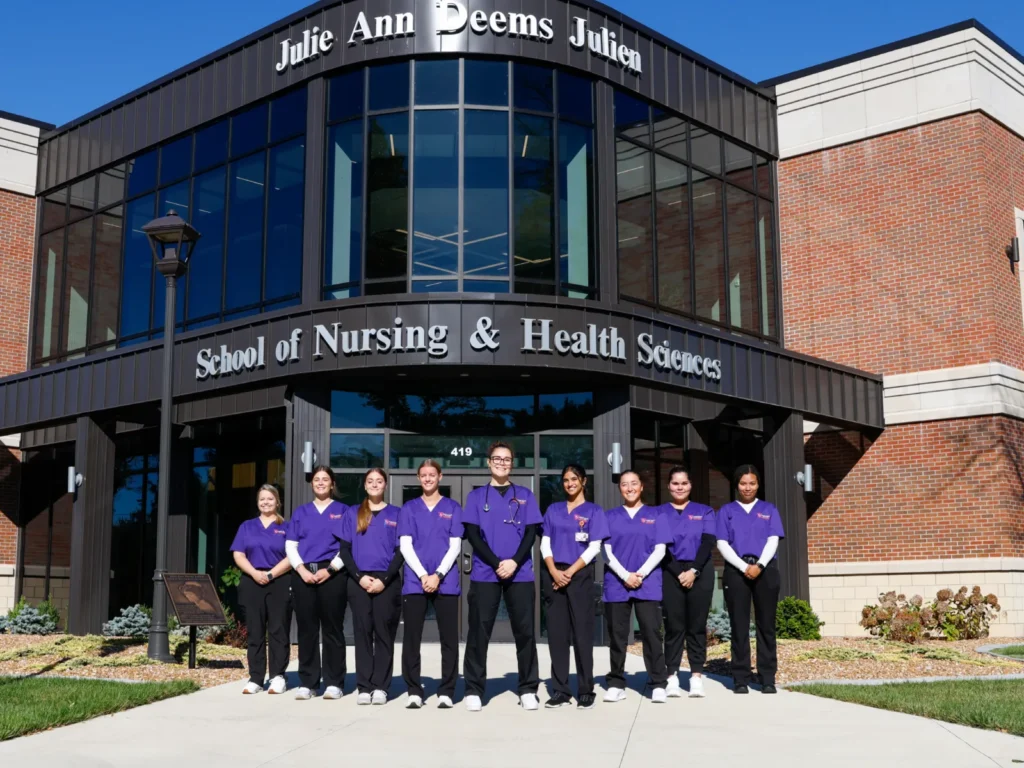
120
credit hours to graduate
65
credit hours in the major
On campus
in Marshall, Missouri
4 years
at a full-time pace
Why health and behavioral science
Science and psychology, together
Study what keeps people healthy, from the cell to the choices people make.
The science of health
Take anatomy and physiology, cell biology, chemistry, microbiology, pathophysiology, and nutrition.
The behavior of health
Study developmental and health psychology, learning and motivation, psychopathology, and counseling.
Choose 12 hours
Add courses in nursing, exercise science, communication, sociology, business, or an internship.
Is this program for me?
This program may be a great fit if you want to…
- Work in a health-related field.
- Understand why people make the health choices they do.
- Combine science with psychology.
- Prepare for further study in a health profession.
What will I study?
Topics you’ll explore
- Explain how the human body works and what happens in disease.
- Use medical terminology.
- Apply nutrition and microbiology to health.
- Explain how behavior, development, and motivation affect health.
- Use statistics to understand health research.
How the degree works
How your 120 credit hours add up
Here’s how the degree is built. Your advisor helps you choose courses each term.
01
General education core
At least 42 credit hours across writing, speaking, math, science, social science, and the humanities.
02
Science and psychology core
Required courses in biology, chemistry, health, nutrition, psychology, statistics, and management, plus a capstone.
03
12 hours of electives
Choose from nursing, exercise science, communication, sociology, business, organic chemistry, or an internship.
04
Electives or a minor
Use the rest of your 120 hours for electives, a minor, or even a second major.
Explore the curriculum
What you’ll study
The major totals 65 credit hours. Here are the required courses and elective options.
Required courses
- BIOL 250 Introduction to Cell Biology
- BIOL 275 Human Anatomy and Physiology I (4 credits)
- BIOL 285 Human Anatomy and Physiology II (4 credits)
- CHEM 112 General Chemistry II (5 credits)
- HLTH 140 Medical Terminology (2 credits)
- HLTH 280 Pathophysiology for the Health Professions
- HLTH 320 or BIOL 320 Microbiology for the Health Professions, or Principles of Microbiology (4 credits)
- EXSI 385 Human Nutrition
- MATH 200 Introduction to Statistics
- PSYC 225 Developmental Psychology
- PSYC 336 Learning and Motivation
- PSYC 342 Health Psychology
- PSYC 345 Psychopathology
- PSYC 460 Theory and Practice of Counseling
- BNSS 212 Principles of Management
- INDS 476 Capstone
Electives (12 credit hours from this list)
- NURS 300 Fundamentals of Nursing
- NURS 303 Health Assessment
- NURS 304 Pharmacology (4 credits)
- CHEM 331 Organic Chemistry I (5 credits)
- COMM 320 Health Communication
- SOCL 320 Urban Sociology
- BNSS 301 Entrepreneurship
- BNSS 312 Human Resource Management
- EXSI 334 Kinesiology
- EXSI 400 Health Promotion and Exercise Prescription
- An internship in exercise science, psychology, biology, or health (EXSI, PSYC, BIOL, or HLTH 401)
General education core (at least 42 credit hours)
- Social and behavioral science (9 hours) from at least two subjects, including one constitution course: HIST 104, HIST 105, or POLS 100
- Written communication (6 hours): ENGL 130 Rhetoric and Composition, plus ENGL 160 or HONR 190
- Oral communication (3 hours), such as COMM 100 Public Speaking & Introduction to Communication
- Natural science: 7 hours from at least two subjects, including a lab (BS); 3 hours (BA and BFA)
- Mathematics (3 hours)
- Humanities and fine arts: 9 hours (BS) or 12 hours (BA and BFA) from at least three subjects, covering the arts and creativity, ethics, and culture and society
- Additional general education from any area, to reach at least 42 hours
- Plus one Writing Intensive (WI) course and one Service Learning (SL) course, which can overlap with other requirements
Graduation requirements
- Complete at least 120 credit hours with a GPA of 2.0 or higher.
- Earn a major GPA of 2.0 or higher, with no grade below C and no pass/fail grades in the major.
- Complete at least 36 credit hours of upper-division (300- and 400-level) courses.
- Complete your last 30 credit hours, and at least 12 hours of your major, at MVU.
- Complete the major assessment requirement.
- Apply for graduation and pay the $100 graduation fee.
Getting started
Three steps to begin
Applying to MVU is free, and most students finish the application in a few minutes.
02
Send your transcripts
Send your high school transcript, plus official transcripts from any college or dual credit courses. Transferring? See the transfer steps.
03
Plan how you’ll pay
Explore scholarships, grants, and loans on Tuition & Financial Aid, or request information for current tuition.
How is this different from exercise science?
Exercise science focuses on fitness testing, conditioning, and exercise prescription. Health and behavioral science pairs health science with psychology and counseling.
Can I add a minor or a second major?
Yes. A minor is optional and appears on your transcript; it must be in a different subject than your major. You can also double major by completing all the requirements for both majors. You’ll receive one diploma.
What do I need to graduate?
- At least 120 credit hours with a GPA of 2.0 or higher.
- A C or higher in every major course.
- At least 36 upper-division credit hours.
- Your last 30 credit hours at MVU.
- An application for graduation and the $100 graduation fee.
Talk with an Associate Dean
Have questions about courses, electives, or how to plan your degree? Reach out. We’re happy to talk through your goals.
BS in Health and Behavioral Science